
How to Begin Building a Elevated Wardrobe
Any wardrobe reset begins with a question most shoppers skip past too fast: what does « prestige » actually signify, when the term gets linked with a clothing brand? It’s not a promotional flourish or a synonym for expensive. Within PRESTIGE as a label, the term points to a design approach built around longevity, reserved detailing, and pieces that avoid needing seasonal swapping out. That nuance counts because it changes how you shop. Instead of buying trend pieces every few months, you’re building a smaller set of items designed to hold up for years. What follows walks through how to begin that process without burning cash on the poorly chosen first purchases.
With any fresh wardrobe build, the urge is to buy everything at once. Push back against that urge. A elevated wardrobe is assembled in stages, starting with foundational pieces and expanding outward as you figure out what you genuinely reach for versus what seemed appealing on a mannequin. Below, we break down the first moves, the thinking behind them, and how to assess whether the collection you’re considering is worth the investment.
Foundations Over Trends: The Reasoning
Within twelve months, trend-heavy wardrobes fall apart: fabrics pill, colors fade unevenly, and last year’s sharp cut reads as dated now. Core pieces avoid this problem because they’re designed around proportions and materials that resist fleeting fashion moments. When people look up a prestige review before buying, this is usually the real question beneath it all: will this still hold up in three years, not three weeks.
Begin with five categories: outerwear, knitwear, denim or tailored trousers, a adaptable top layer like a hoodie, and footwear. These five categories account for roughly 80% of everyday outfit choices for most people. Going right for statement pieces — a loud jacket, an offbeat print — before these essentials are settled often results in the statement piece staying in the closet because it has no partner pieces.
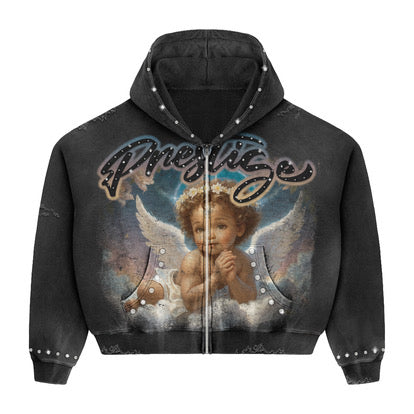
Fabric weight and build quality matter more than logo placement. A carefully made hoodie keeps its form after 50 washes; a shoddily built one stretches at the collar within ten. Here is where reading a PRESTIGE clothing review thoroughly pays off — look for mentions of fabric weight in GSM, stitch density, and how garments signature streetwear perform after repeated laundering, not just how they look in a single product photo.
The First Five Purchases
If you’re starting from zero, order matters. Getting the order wrong means early purchases don’t mesh with later ones, and you end up with a closet packed with items that fail to complement one another. Here’s a workable sequence built around cost-per-wear logic.
- A neutral-toned outerwear piece, which anchors almost every look and gets worn across three seasons annually.
- Between outerwear and base layers, a tailored hoodie or medium-weight knit usually functions as the in-between garment, a role the prestige hoodie category usually covers.
- One pair of cleanly fitted pants or denim that sit right straight off the rack.
- A single pair of adaptable shoeswith a preference for leather or a rugged technical fabric.
- A base layer top in a shade that coordinates with everything else purchased so far.
Take note that color repeats deliberately across this list. A wardrobe with five items in clashing colors produces fewer usable outfits than a wardrobe with five items in two coordinated tones. It’s simple combinatorics, yet it remains the most commonly ignored rule for first-time shoppers at a prestige store.
Reading a Prestige Store Listing Accurately
If you know what to look for, the product description at an online prestige store reveals more than its photos ever will. Material composition, weight, and care instructions indicate how a piece holds up once actually worn, rather than under showroom conditions. A cotton-poly blend performs unlike pure cotton — the blend often resists wrinkling better but breathes less. Neither option is inherently better; each suits its own purpose.
Don’t assume uniform sizing throughout a full prestige clothing range — instead, read the sizing notes attached to each specific item. Because layering room is factored in, outerwear frequently fits differently than base layers. Skipping the sizing note and guessing based on a different item’s fit is the most common return-triggering mistake shoppers make.
Pay attention, too, to a piece’s stated purpose — everyday wear, transitional-weather use, or occasion-specific styling. A prestige collection typically separates pieces by function this way, and matching the piece to its intended use extends its lifespan considerably. A jacket rated for daily wear will outlast one designed for occasional styling if worn according to its actual purpose.
Weighing Wardrobe-Building Strategies
No single correct method exists for building a wardrobe, yet the available approaches vary enough in cost, speed, and long-term value to warrant a side-by-side comparison before you commit.
| Strategy | Initial Cost | Time Required | Long-Term Value |
|---|---|---|---|
| Trend-chasing purchases | Individually inexpensive, but costly in total | Ongoing, never settles | Poor, given constant need for replacement |
| Capsule-based approach | Moderate, concentrated | A span of 2-3 months | High — pieces coordinate deliberately |
| Prestige foundation-first method | Moderate to high, staged | 3-6 months | Strong, designed to last multiple years |
| Impulse-based accumulation | Erratic | Open-ended | Weak — lots of closet clutter, few usable outfits |
A foundation-first strategy takes longer than impulse shopping but yields a wardrobe where nearly every garment receives frequent rotation. That’s the actual measure of value — not how much something cost, but how frequently it gets worn.
What Shifts On the Way to 2026
Material science and shopper standards have shifted enough that a high-end 2027 projection is already influencing how collections are designed today. Shoppers are asking more specific questions about material origin, resilience testing, and repairability before finalizing a buy. This movement rewards brands that were already building for longevity rather than chasing seasonal fads.
Anticipate more openness around sourcing and manufacturing detail in product listings as 2026 approaches and continues. Customers weighing a high-end review against several sources now expect hard particulars — fiber density, stitch strength, wash-test results — rather than generalized promises. That’s a fair standard to hold, and it’s reasonable to measure any premium apparel purchase to that same standard before buying.
Approaches to layering are shifting too. Rather than replacing full outfits each season, a lot of closets now run on a mix-and-match structure: three or four foundational pieces that mix and match across different climate ranges. A midweight hoodie, a shell jacket, and a thermal layer can handle temperature ranges from mild autumn days to the edge of winter, reducing the overall item count required without compromising versatility.
Typical Pitfalls to Avoid
Buying too many similar items too early is the most common error. Three near-identical jackets in slightly different shades don’t multiply your styling possibilities; they just take up space. Prioritize functional variety before color variety.
Disregarding care instructions reduces the lifespan of even quality-built clothing. A knit that calls for cold washing but ends up in a high-heat wash will distort in size within a handful of washes, however well it was originally made.
Neglecting to double-check sizing because a size worked in a different brand or a different item within the same range causes avoidable returns. Cuts vary between outerwear, knitwear, and denim even within one consistent high-end collection, so evaluate sizing separately for every item.
Last Considerations on Beginning the Process
Putting together a wardrobe that earns the « prestige » label isn’t about how large the closet is or the number of items in it. What matters is the balance between what gets worn and what sits unused. Start with the five foundational categories, order your buying so that each new piece pairs with what you already own, and examine listings thoroughly enough to understand how the material performs before checkout. Do that consistently for three to six months, and the wardrobe takes shape as something coherent rather than accidental.